
When shots slowly start becoming a game.
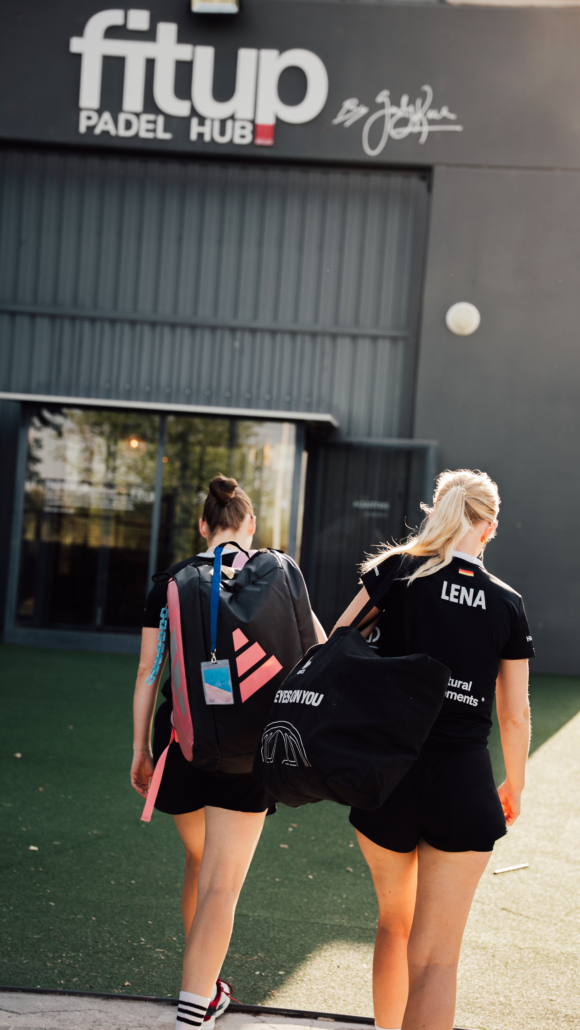
Marcelo and Rulo, Katha’s coaches in Madrid, didn’t need particularly long to reach their first conclusion. Katha knew how to hit the shots, they said. Now she just had to learn how to play padel.
At first, that sounds a little like telling someone who has just graduated from high school that, at least, they’ve got the alphabet down pretty well. It was meant to be less devastating than it sounds. The technique is there. So is the athleticism. What’s missing is the part that doesn’t look quite as impressive in slow motion: making the right decision at the right moment.
Padel isn’t simply about placing the ball as precisely as possible where nobody happens to be standing. It’s about knowing why you’re playing it there. When a shot buys you time. When it takes time away from your opponent. When to attack, when to wait, and when the most spectacular shot is spectacular mainly because a more sensible one would have been the better idea.
In her first few days, Katha learned several new shots. And with every new shot, not only did her repertoire grow, but so did the number of opportunities to choose the wrong one at the wrong moment. After all, progress is rarely the pleasant experience of suddenly being able to do more. More often, it begins with becoming much more aware of everything you’re still not getting quite right.
So they trained. Group sessions in the mornings, individual sessions in the afternoons, soon with additional time in the gym. In between: coffee, car rides and the daily realisation that Madrid feels particularly enormous when the padel club happens to be on the other side of it. The days quickly settled into the reliability of a school timetable: get up, get coffee, train, eat, train again, review footage, edit, plan. And tapas in the evening – less out of tourist curiosity than the pragmatic realisation that their own kitchen wasn’t necessarily a place they needed to spend any more time in than absolutely necessary.
While Katha was learning to reorganise her game in Madrid, Lena was back in Germany trying to get her knee back into something resembling working order. Doctor’s appointments, physiotherapy, training, new assessments. The first forecasts sounded more like patience than plane tickets.
Athletes, however, have a particular relationship with forecasts like these. They hear “several weeks off” and immediately start wondering just how flexible the word “several” might be.
So there was treatment, mobilisation and careful testing. Katha and Lena spoke on the phone several times a day. One talked about shots she hadn’t known before. The other about movements that were slowly becoming possible again. Two training plans, only one of them taking place on a court.
Then came the news that Lena could carefully start again. No long rallies yet, no quick changes of direction and preferably no unnecessary heroics. But some first shots, technical training and small doses of physical load. Enough, at least, to book a flight.
And just like that, the story found another direction we hadn’t known about a few days earlier. The unplanned solo could become the doubles team we had originally set out to follow after all. Not quite the way it had been written in the concept, but much closer to what this documentary was really about in the first place.
While Katha had to learn which ball to play when, Lena first had to find out when her body was ready to play along again. One was working on her understanding of the game, the other on trusting her own knee. Both can be trained. Neither can really be rushed.
And then Lena was back in Madrid.
What that will mean for the training, for the two of them and for the journey they’re on together remains to be seen.
We could have written a better transition into the next episodes.
Just probably not a more honest one.


